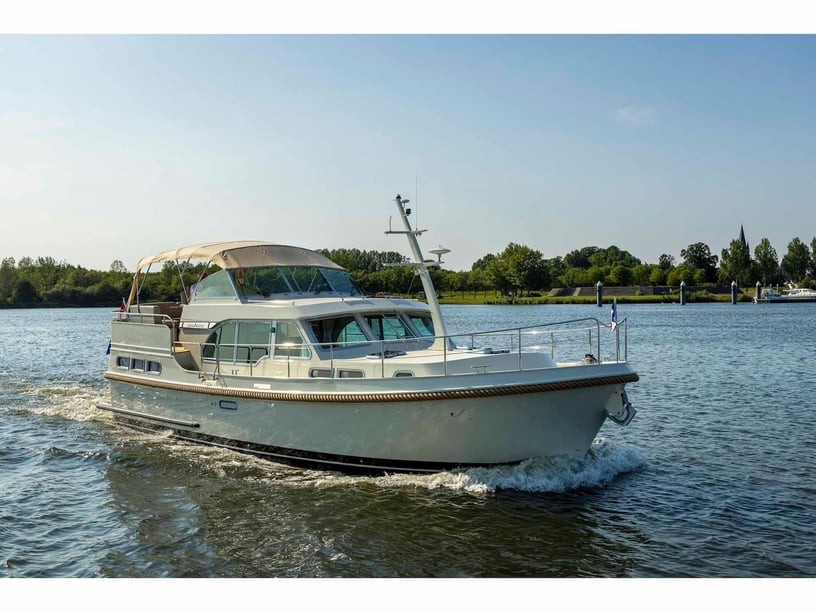
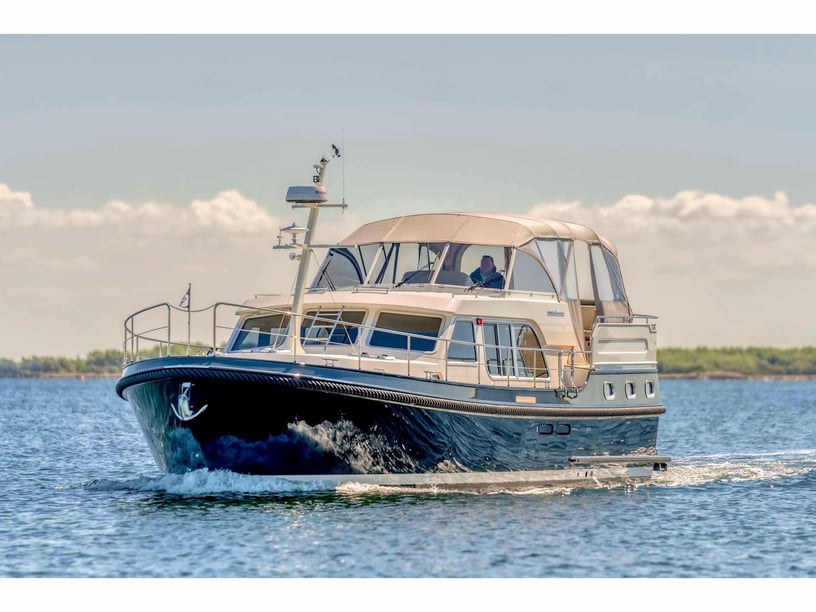
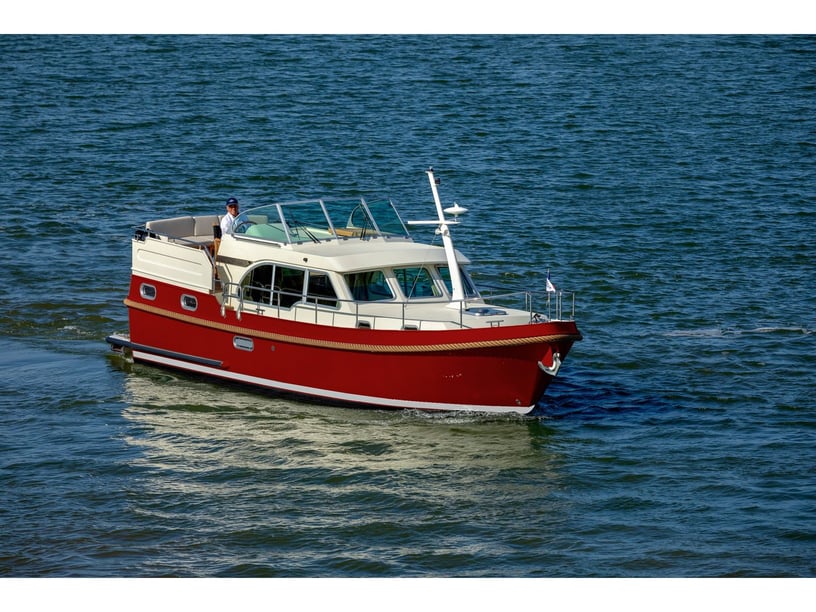
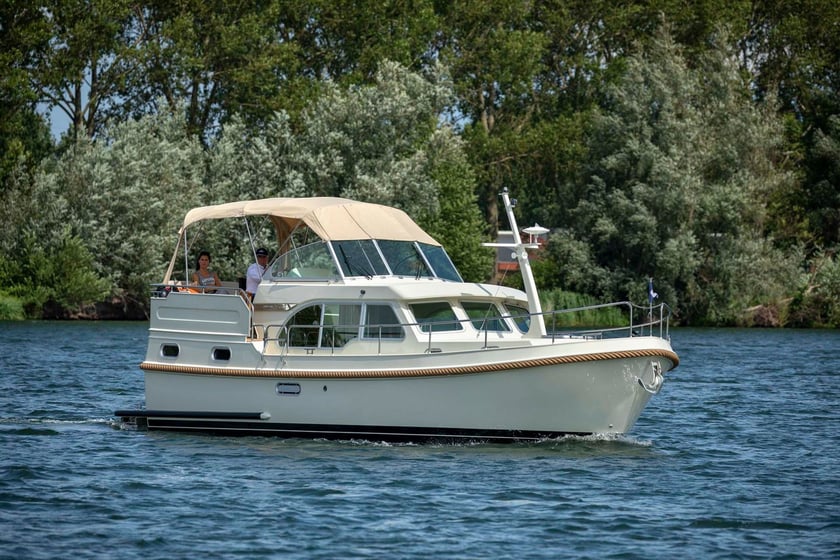
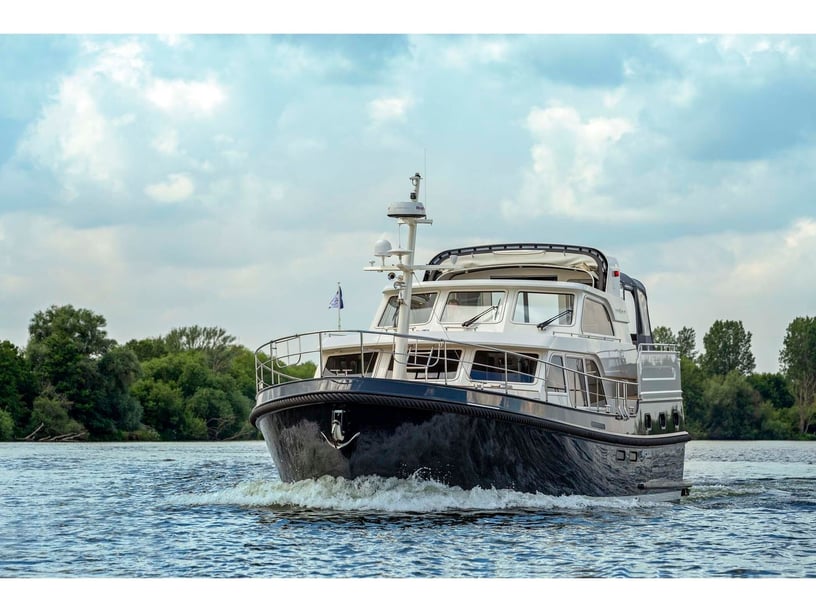
Yacht charter in Kinrooi
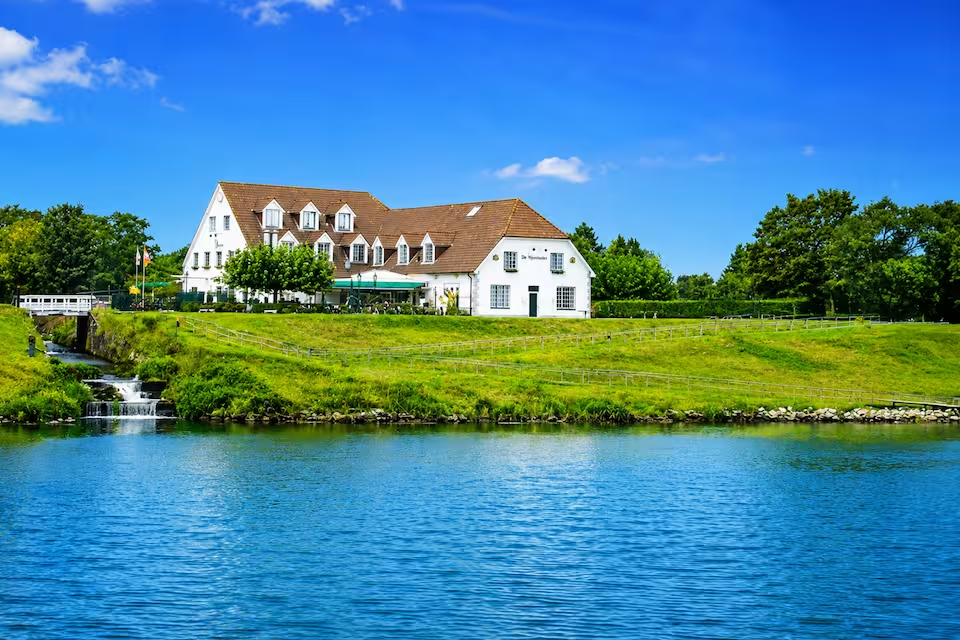
Kinrooi offers an inland yacht-charter setting in northeastern Belgian Limburg, beside the Dutch border. Its boating landscape is shaped by the Meuse and a network of connected gravel-extraction lakes known as the Maasplassen. De Spaanjerd Marina at Ophoven is the principal waterside hub, accommodating sailing boats and larger motor yachts.
Rather than long open-water passages, a yacht charter in Kinrooi revolves around short lake crossings, river cruising and stops in Belgian and Dutch Maasland villages. Days can combine time underway with swimming in designated lake areas, nature walks or cycling through the flat river landscape. The connected waterways also allow suitably equipped yachts to travel farther toward Thorn, Wessem and Roermond.
Places to explore around the Maasplassen
Ophoven is the natural center of the local boating area. From De Spaanjerd, crews can cross the Vissenakkerplas and enter the connected Meuse waterways. Nearby Geistingen and Kessenich add village character, while Kessenich’s preserved medieval motte foundations provide a reason to spend time ashore.
To the south, the passage toward Aldeneik and Maaseik links the marina with Heerenlaak and another group of former gravel lakes. Northbound routes cross into the Netherlands, where Stevensweert, Thorn and Wessem are practical village stops. Thorn is particularly suitable for an overnight itinerary, while Wessem provides access to adjoining Maasplassen channels. Roermond lies farther north and suits a longer cruise planned around Linne lock, marked navigation routes and commercial traffic.
What cruising in Kinrooi is like
Kinrooi’s waters are non-tidal and have no ocean swell, making the area well suited to line-of-sight sailing and relatively contained cruising. The broad gravel lakes offer more room than a canal, but shores and marina facilities generally remain close. Predominantly southwesterly winds tend to be lighter in summer than in winter.
Conditions change when a route moves from the lakes onto the Meuse. River levels, current, locks, marked channels and other traffic become more important, particularly on longer passages. Strong winds can also make the exposed lake surfaces uncomfortable, and summer thunderstorms warrant attention to forecasts. Newcomers may prefer local lake cruising or sailing instruction, while experienced crews can plan cross-border passages with an appropriate yacht.
Best time for a Kinrooi yacht charter
The main recreational boating season runs from April through October. June, July, August and September are particularly suitable months, with July and August bringing the warmest weather and the highest level of activity around the lakes.
June offers favorable boating conditions before the principal midsummer peak, while September combines shoulder-season conditions with a generally quieter atmosphere. May can also suit flexible travelers, although it is not identified among the destination’s best months. Seasonal pricing is generally lower in May, June and September than during midsummer, but actual rates and availability depend on the chosen boat and dates. From November through March, many rental and visitor services reduce their normal operations.
Cruising routes from Kinrooi
A straightforward day cruise can follow the established Hap en Snap route north from Ophoven toward Stevensweert, Thorn and Wessem, or south toward Ohé en Laak. It combines Maasplassen channels with opportunities to stop in riverside villages rather than requiring a fixed day-by-day schedule.
For an overnight trip, visitor harbors at Thorn or Wessem can be combined with permitted quiet-lake moorings; anchoring should remain clear of the Meuse navigation channel. Another local option connects De Spaanjerd with Heerenlaak near Aldeneik. The longer route to Roermond continues through Linne lock and is better suited to a suitable motor yacht and a crew prepared for lock procedures, river traffic and current navigation information.
Nature, swimming and time ashore
The lakes themselves tell part of Kinrooi’s story: gravel extraction during the twentieth century created waterways that were later adapted for recreation and nature. Today, yacht trips pass floodplains, old river channels, gravel banks and protected areas within RivierPark Maasvallei. Koningssteen-Kollegreend is one of the nearby nature areas suitable for exploring ashore.
Swimming belongs in designated lake and beach areas such as De Steenberg, not in the Meuse. Fishing is another established activity, though permits and rules change between Belgian and Dutch waters. On land, cycling and walking routes connect the boating area with church villages, windmills and local heritage. Kinrooi’s agricultural identity is also visible in its asparagus cultivation, locally described as “white gold.”
Access, marinas and departure points
Road travel is generally the most practical way to reach Kinrooi’s waterside facilities. Maastricht Aachen, Eindhoven and Düsseldorf are the relevant airports, but onward travel normally requires a car or a combination of buses and a local transfer.
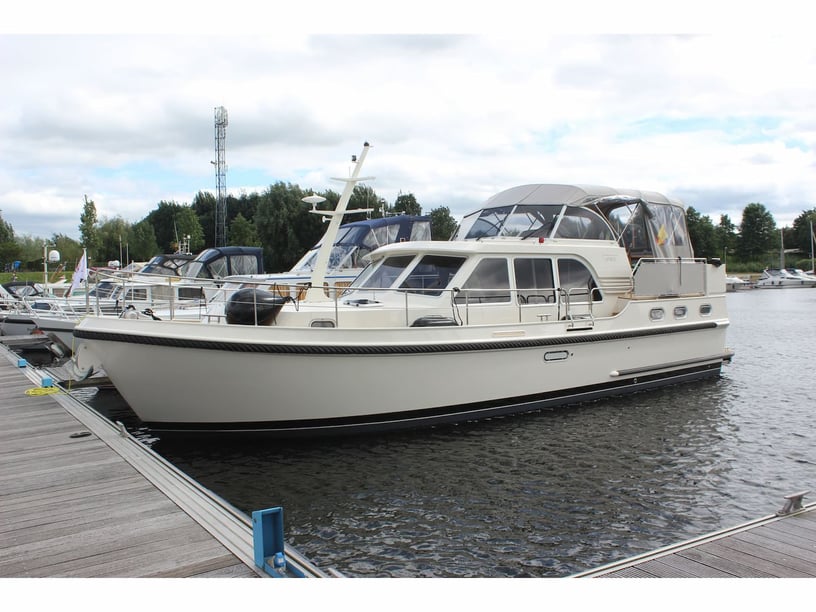
De Spaanjerd Marina in Ophoven is the main departure area for sailing boats and motor yachts. Sailcenter Limburg and Aqua Libra Yachtcharter also operate from the De Spaanjerd area, while Botel Harbour and StilSloep are based at Agropolis Park. Heerenlaak Marina near Aldeneik is useful on southern routes. A seasonal pedestrian-and-cycle ferry connects Ophoven with Ohé en Laak, although it does not carry cars and may stop running during extreme high water.
Planning the right charter
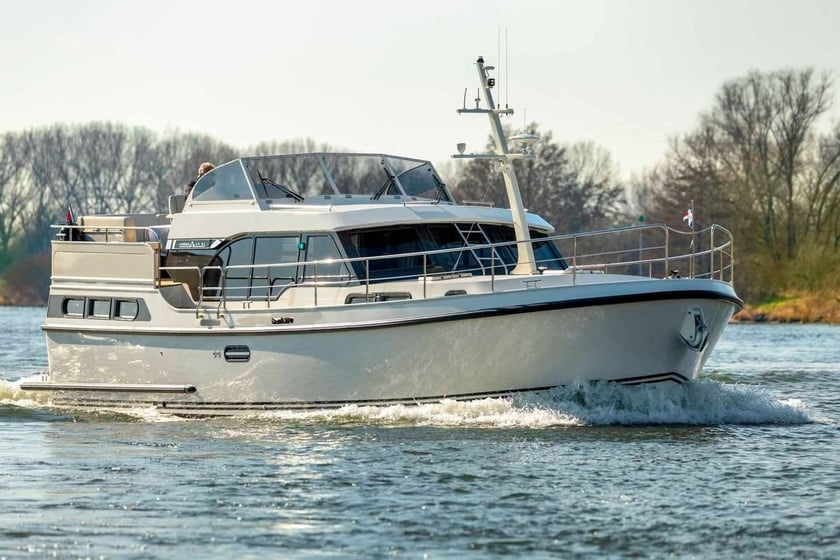
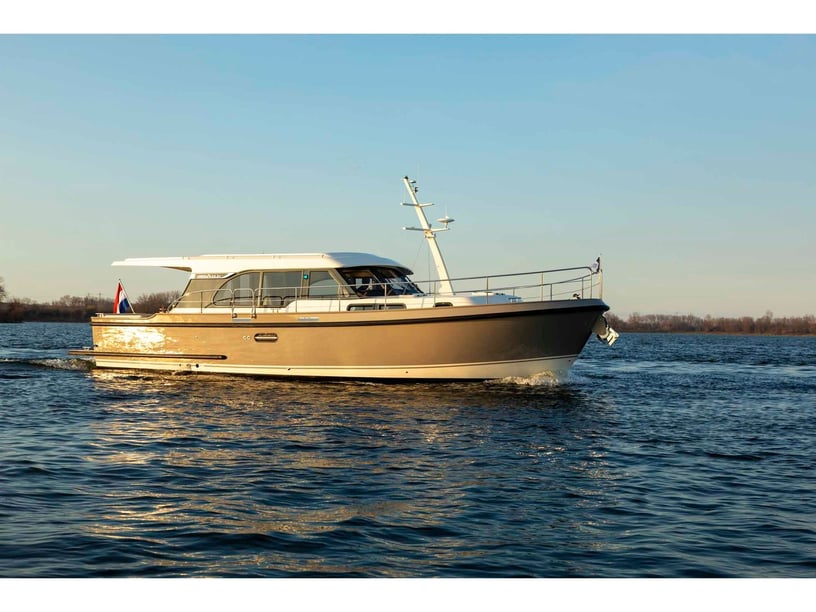
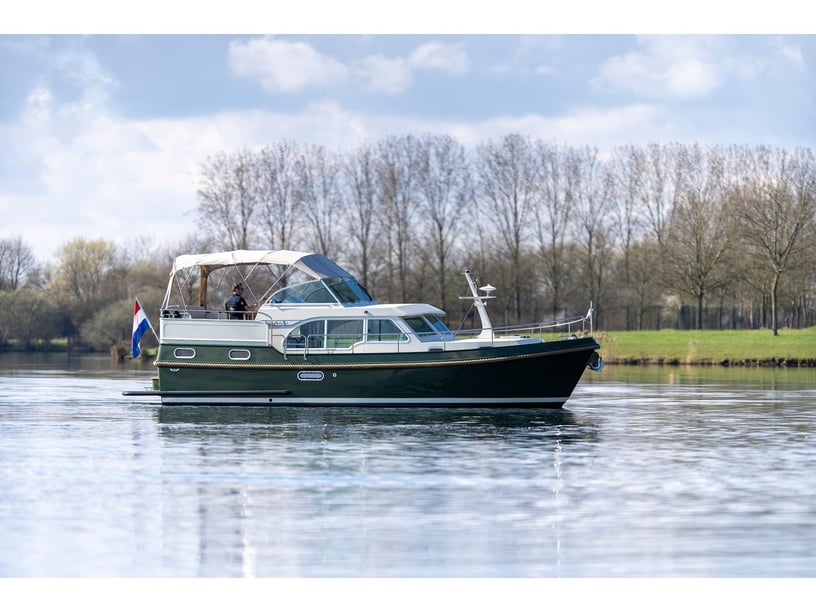
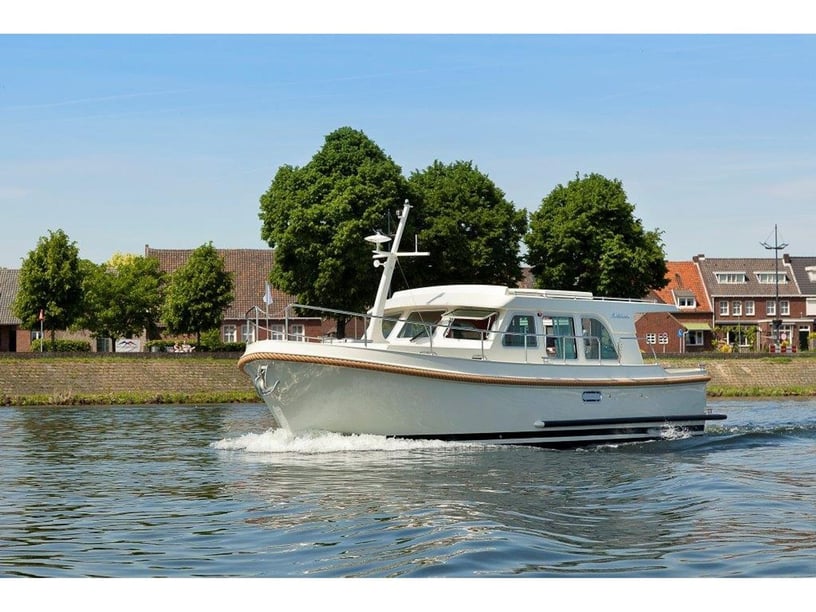
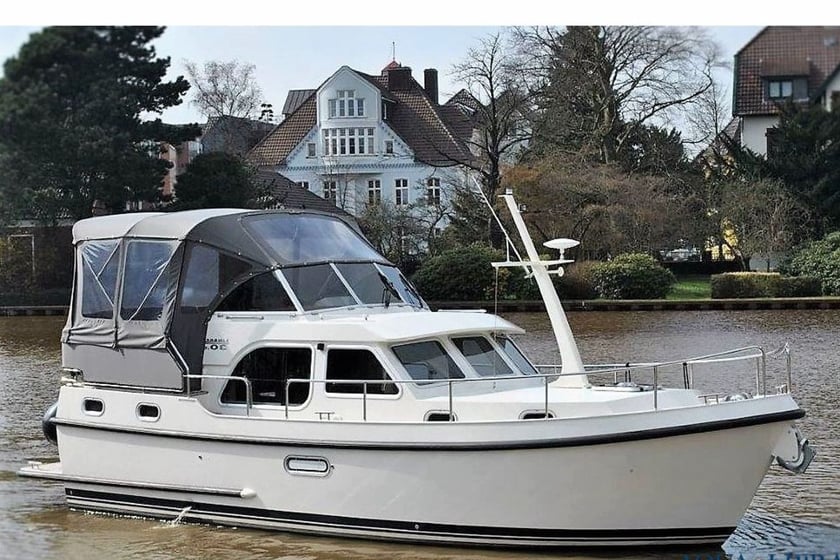
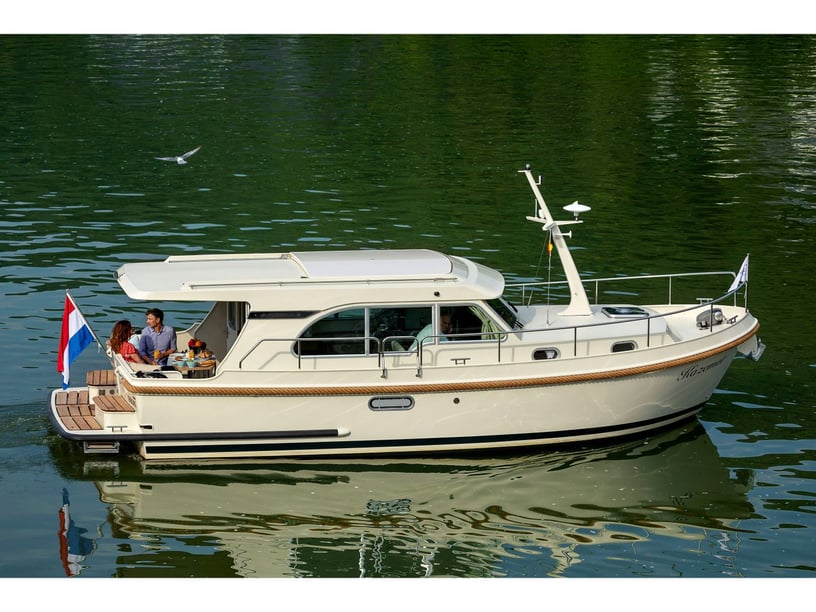
Travelers comparing yacht charter and boat rental in Kinrooi should begin with the intended route. A short lake outing demands less passage planning than a cruise involving the Meuse, locks or Roermond. For trips extending beyond the immediate lakes, confirm that the craft is suitable for river conditions and that the skipper meets any licensing or experience requirements. Those considering different formats can compare local sailboat charter and motor yacht charter options.
Before departure, consult current nautical charts and check Meuse water levels, lock operations, navigation notices and weather forecasts. Observe local speed limits, marked channels and nature or rest zones. Swimming should be limited to designated lake areas, with current water-quality notices checked locally; swimming in the Meuse is prohibited. Fishing regulations also differ across the Belgian-Dutch border. For a broader view of inland and coastal choices, compare yacht charter options across Belgium.